


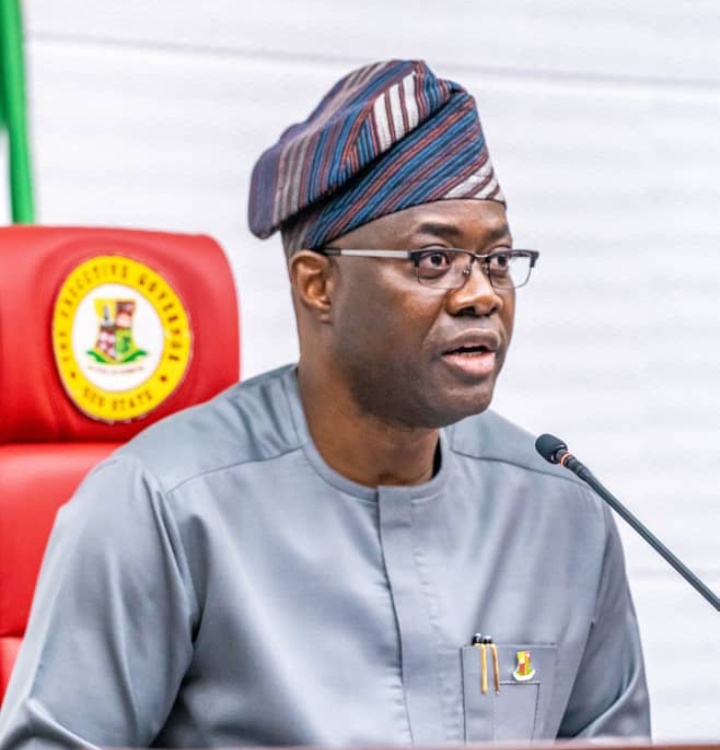
An internet rat, desperate to reclaim lost fame, has an axe to grind with Governor Seyi Makinde. His angst against the governor is his incomprehension of the need for Makinde’s opposition to President Bola Tinubu. The ranting rat deplored the governor, wondering how he could move from being a Tinubu’s pillar of support in 2023 to becoming his 2027 albatross. He cannot understand why Makinde, a Yorubaman, will be antagonistic of his tribesman.
Well, for the information of this internet warrior and others like him, Makinde’s support for Tinubu in 2023 was not due to regional affinity but was borne out of his conviction that after Muhammadu Buhari’s eight-year rule as president, the presidency should return to the South. He made that crystal clear. That is why he opposed his party’s position of fielding a Northern candidate and lent his support to Tinubu from the South.
But the scenario is no longer the same. Maybe Makinde would still have been in support of Tinubu if the 2023 situation had subsisted. But no, it has changed. Now, President Tinubu has been harvesting where he did not sow; he has been luring governors and lawmakers elected on the platform of other parties to his side. Deliberately and decisively, opposition parties are being weakened. Currently, the President’s party, the All Progressives Congress (APC), has 31 state governors, in addition to those of Anambra and Osun who have pledged their support to him. So, technically, President Tinubu is walking Nigeria down the road to a single-party system.
To many people, this is just politics. They do not see the danger ahead. But becoming a one-party state forebodes disaster. A one-party system is a threat to good governance, economic prosperity and human rights. In a one-party state, the citizens are the ultimate victims. First, they lose their freedom of choice, then they lose their freedom of association, later they lose their freedom of expression, and finally they lose their right to a good life.
Examples abound in history.
Until 1999, Venezuela, home to the world’s largest oil reserves, was a thriving democracy. But as the country slid into a one-party system and shut out opposition and dissenting views, the country gradually slipped into insolvency and underdevelopment. Now, despite the country’s petrodollar, about 8million Venezuelans are refugees in various countries due to severe socio-economic crises, violence, and lack of basic services.
The fact is that everyone who led his country to a one-party system started out with good intentions. Kwame Nkrumah’s reason for turning Ghana into a one-party state in 1964 was to consolidate power for rapid national development and protect the country against what he perceived as neo-colonialist threats. But he ended up muzzling the opposition, thus causing the military to rise against him in a coup d’état.
When Jomo Kenyatta proposed a one-party system in Kenya, he hinged his plan on the need to foster national unity among diverse ethnic groups and accelerate economic development following independence. While Kenya under Kenyatta experienced a measure of development, the system foisted untold hardship on the people as the country experienced widespread political repression, corruption, and entrenched ethnic disparities.
Adolf Hitler started out as a democrat. But shortly after becoming German Chancellor on January 30, 1933, he commenced the process of dismantling the democratic structure of the country. By deploying the weapon of legislation, fear and violence, he eliminated political opposition, trade unionism and state autonomy. Germans were not the only victims of Hitler’s (mis)rule, the whole world bore the brunt through the Second World War.
These leaders got away with their one-party state plan because the people kept quiet. Martin Niemöller captures the devastating consequence of keeping silent in the face of tyranny in a 1946 poem, titled First They Came. He wrote:
First, they came for the Communists
And I did not speak out
Because I was not a Communist
Then they came for the Socialists
And I did not speak out
Because I was not a Socialist
Then they came for the trade unionists
And I did not speak out
Because I was not a trade unionist
Then they came for the Jews
And I did not speak out
Because I was not a Jew
Then they came for me
And there was no one left
To speak out for me
So, the idea of turning Nigeria into a one-party state is something that should gnaw every patriotic Nigerian because the fulcrum on which democracy pivots is availability of options. As observed by Governor Makinde at the National Summit of Opposition Political Leaders, which held in Ibadan on Saturday, 25 April 2026, “Democracy is defined by the existence of real alternatives, by the ability of citizens to choose, and by the confidence that those choices matter. Once that disappears, what we have may still be called democracy, but it will no longer function as one.”
So, Makinde is not opposed to Tinubu, but he is staunchly averse to the idea of robbing Nigerians of the opportunity to experience real democracy by crowding out opposition political parties.
Again, Makinde made this abundantly clear while he was addressing opposition party leaders at the summit earlier referenced.
The Governor had said: “Let me also be clear about what this meeting is not.
“It is not a gang-up against one man; and it is not about individual ambitions to be president. It is about the collective ambition of the Nigerian people to have a democracy properly defined.
“This is a gathering about something more fundamental, the survival of a system that allows Nigeria to remain open, competitive, and accountable.
“Because democracy without opposition is not democracy, it is a slow drift toward a one -party State.
“And Nigeria must not make that drift.”
If Makinde chooses to speak out against Nigeria’s glaring drift to a one-party state, it is because for him, it is Nigeria first. That’s what played out in 2023 when he moved against the choice of his party; that’s what is playing out now as he is pushing for a multi-party democracy. Governor Seyi Makinde is motivated by conviction, not convenience. He is driven by the conviction to stand for what is right, no matter how powerful those in the wrong may be; the conviction to work for the good of the people, no matter how many people are opposed to the idea; the conviction to speak truth to power, no matter whose ox is gored.
The internet rat makes a laughable comment about poverty in Oyo State. For his information, while poverty is on the rise in the nation, it is on a decline in Oyo State. The reason is that Governor Makinde has deployed a multi-pronged strategy to arrest the menace.
The National Bureau of Statistics (NBS), in its 2022 National Multi-dimensional Poverty Index report, identified four major determinants of poverty; which are health, education, living standards, work and shocks.
According to the agency, health comprises nutrition, food security as well as access to healthcare; education has to do with school attendance, years of schooling and school lag; living standard is determined by access to water and good sanitation; work is a function of unemployment and underemployment, while shocks have to do with security.
In Oyo State, long before the NBS came up with its report, the administration of Governor Seyi Makinde had rolled out a plan of taking the people of Oyo State from Poverty to Prosperity using the four pillars of Health, Education, Economic expansion and Security. This strategy is well enunciated in the governor’s Oyo State Roadmap to Accelerated Development 2019-2023 and the Oyo State Roadmap to Sustainable Development 2023-2027.
Makinde has deployed the ‘One Ward One Primary HealthCare Centre’ strategy to take good healthcare services to the doorstep of every Oyo State resident. Consequently, over the past almost seven years, Oyo State Government has upgraded about 300 PHCs with 264 of them fully equipped.
Similarly, the state government has upgraded, equipped and staffed many secondary and tertiary healthcare facilities. These include Adeoyo Maternity Hospital, Yemetu, Ibadan; Ring Road State Hospital, Adeoyo, Ibadan; Jericho Nursing Home, Jericho, Ibadan; LAUTECH Teaching Hospital, Ogbomoso; General Hospital, Aremo, Ibadan; General Hospital, Eruwa; General Hospital, Tede and Secretariat Staff Clinic, Agodi, Ibadan.
To facilitate food security and increase food production in the state, the Seyi Makinde administration has been empowering and supporting smallholder farmers. The administration came up with the tractorisation subsidy policy, through which the state government defrays 50 percent of the cost of hiring tractors to clear farmlands for farmers. This automatically reduces farmers’ cost of doing business.
To improve farmers’ output, the government launched a comprehensive digital soil testing initiative across 100 communities in the state. The scheme is designed to provide farmers with precise soil data, which will enable them to maximize their farming practices and increase productivity.
In the same vein, the state government, as part of the Sustainable Actions for Economic Recovery (SAfER), supported over 3,000 farmers with a sum of N1billion as agric credit loan through the Oyo State Agricultural Credit Corporation. Qualified farmers had access to between N250,000 and N1 million based on the size of their farms to improve their farming enterprise.
As the government supports crop farmers, so does it also support non-crop farmers. A total of 2,660 poultry farmers across the state have each been given eight bags of 50kg of maize grain, a total of 1,000 fish farmers across the state were each given three bags of fish feeds, no fewer than 1,008 swine farmers across the state have benefited from the free distribution of 100kg bags of palm-kernel cakes and two jars of Agrichlor disinfectants each all of which have enhanced their capacity and boosted their productivity.
Governor Makinde sees education as the force that unleashes the potential of individuals and positions them to take advantage of opportunities around them. In his first pronouncement shortly after taking the oath of office on May 29, 2019, Makinde abrogated the payment of N3,000 fee per child, thus making education at both the primary and secondary levels free in the state. That pronouncement has seen about 65,000 out-of-school children in the state return to school. Consequently, Oyo State which, according to a 2018 StatiSense report, had the highest number of out-of-school children in South West Nigeria has moved up the ladder of states with low out-of-school children rate in the country.
The Governor then made a promise that he would endeavour to meet the United Nations Educational Scientific and Cultural Organization (UNESCO’s) recommendation of voting between 15 and 20 per cent of budget to education. The high budgetary allocation to education, coupled with an unflagging commitment to paying counterpart fund for Universal Basic Education Commission (UBEC) projects, enabled the government to embark on extensive improvement of facilities in primary and secondary schools. Over the past 83 months, close to 1,000 classrooms in all 33 local government areas of the state have been renovated. Similarly, over 60 model schools have been completed while free textbooks and exercise books have been provided to secondary school students.
However, the governor has not only focused on primary and secondary schools, as he has also improved the lot of all the tertiary institutions in the state. One of the major steps taken by Makinde to steady the shaky state-owned institutions was the payment of the inherited salary arrears. He has also been supportive of Oyo State students in the Law School by providing them with N500,000 bursary awards sinc
